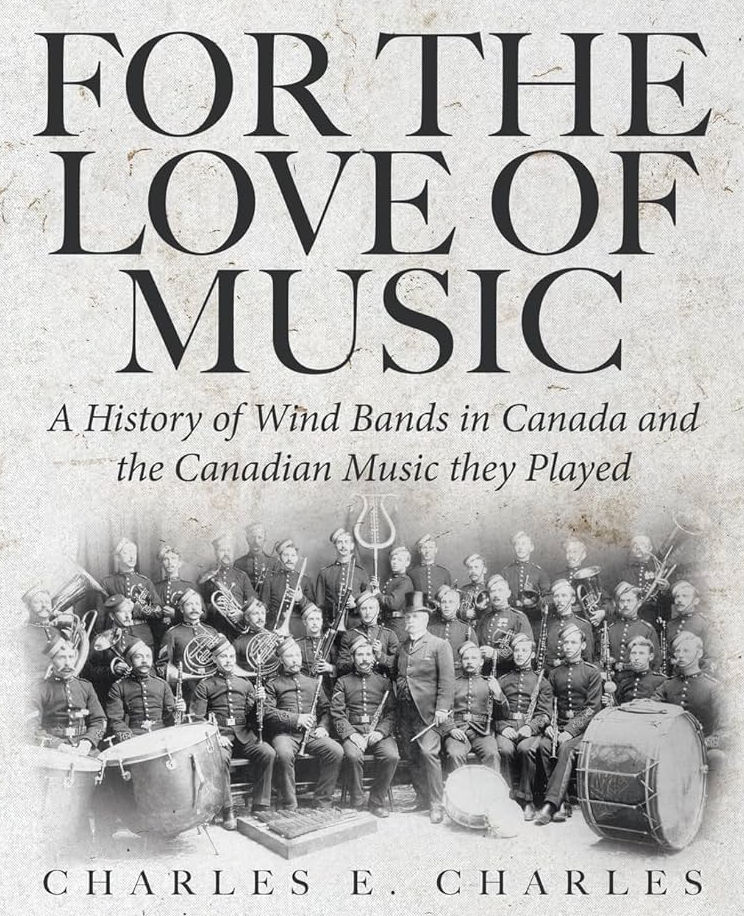
A splendid new book on the history of wind bands in Canada – from the early bands to the community, military and school bands of later years. Also illustrating the musical heritage of Canadian band music. 475 page of fascinating history, this is a great addition to the published research in the brass and wind bands of the world. Having just received my copy, I look forward to many hours delving into its depths and find out more about our Canadian banding cousins.
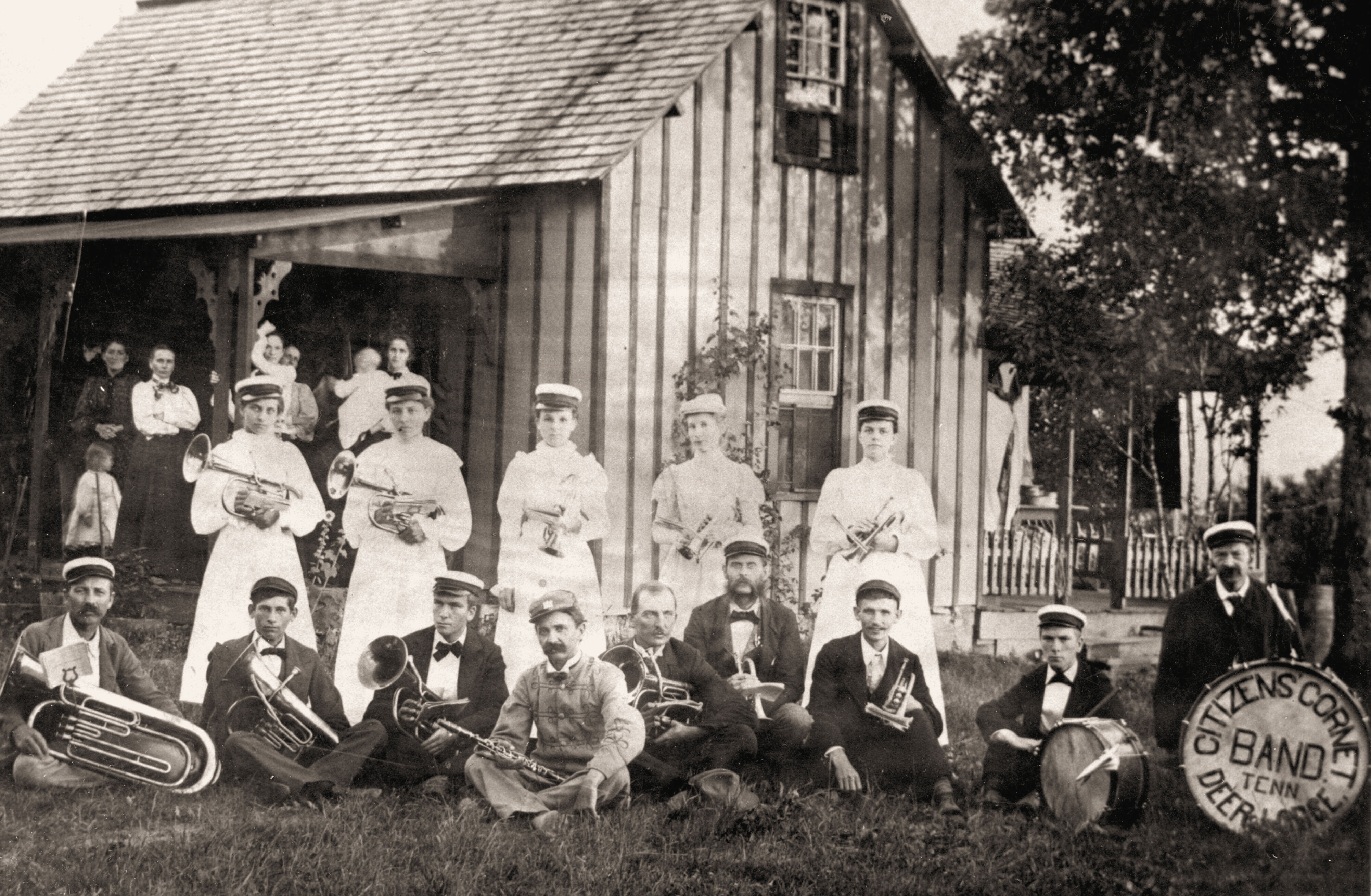
Deer Lodge is a small community in Tennessee, which was established as health resort in the 1880s. At its peak, in the 1890s it had two hotels, a newspaper, a theatre, a band, a planing mill, and numerous clubs and civic organizations. The population had significantly declined by the mid-20th century with many younger people moving away.
The Deer Lodge Citizens Cornet Band was founded in March 1910 by Professor George Clark, of Harriman, Tennessee. As can be seen from the photograph, a third of the band were ladies. Unlike the UK, it was not unusual to find women members of brass bands in the USA during the nineteenth century. Indeed, there were quite a few ‘ladies only’ bands (sometimes led by a man). No further details are known about this particular band.
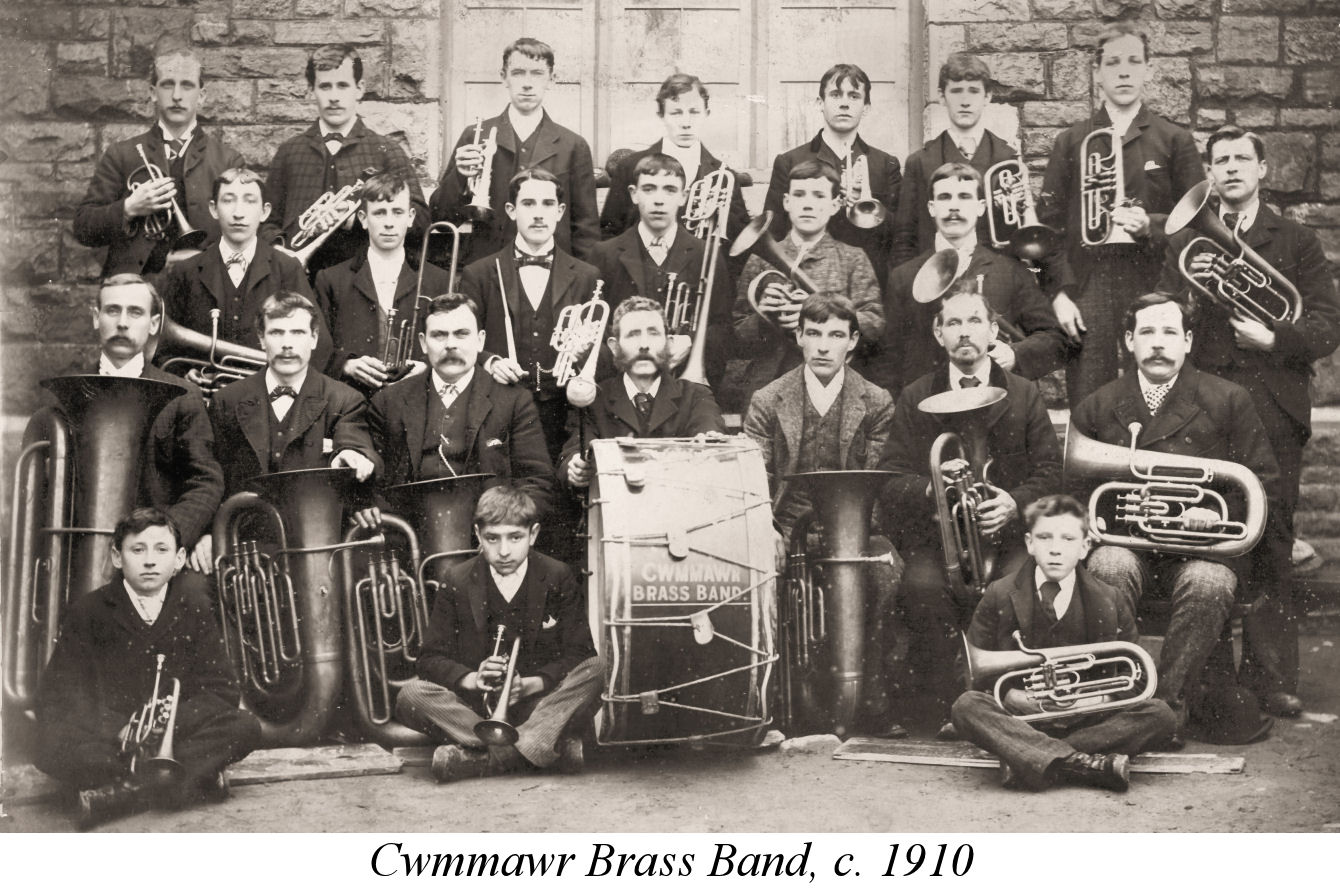
A photograph of Cwmmawr Brass Band, which was a member of the West Wales Association of Brass Bands. The association was founded in September 1901, and some details appear in the Kidwelly Castle Contest programme of 13 July 1912. which include a brief history of the association, lists of the players in the member bands, and pictures of their bandmasters. As far as I know, none of these bands from 1912 have survived since that time, though successor bands in Gwaun-Cae-Gurwen and Burry Port keep the brass band tradition alive today.
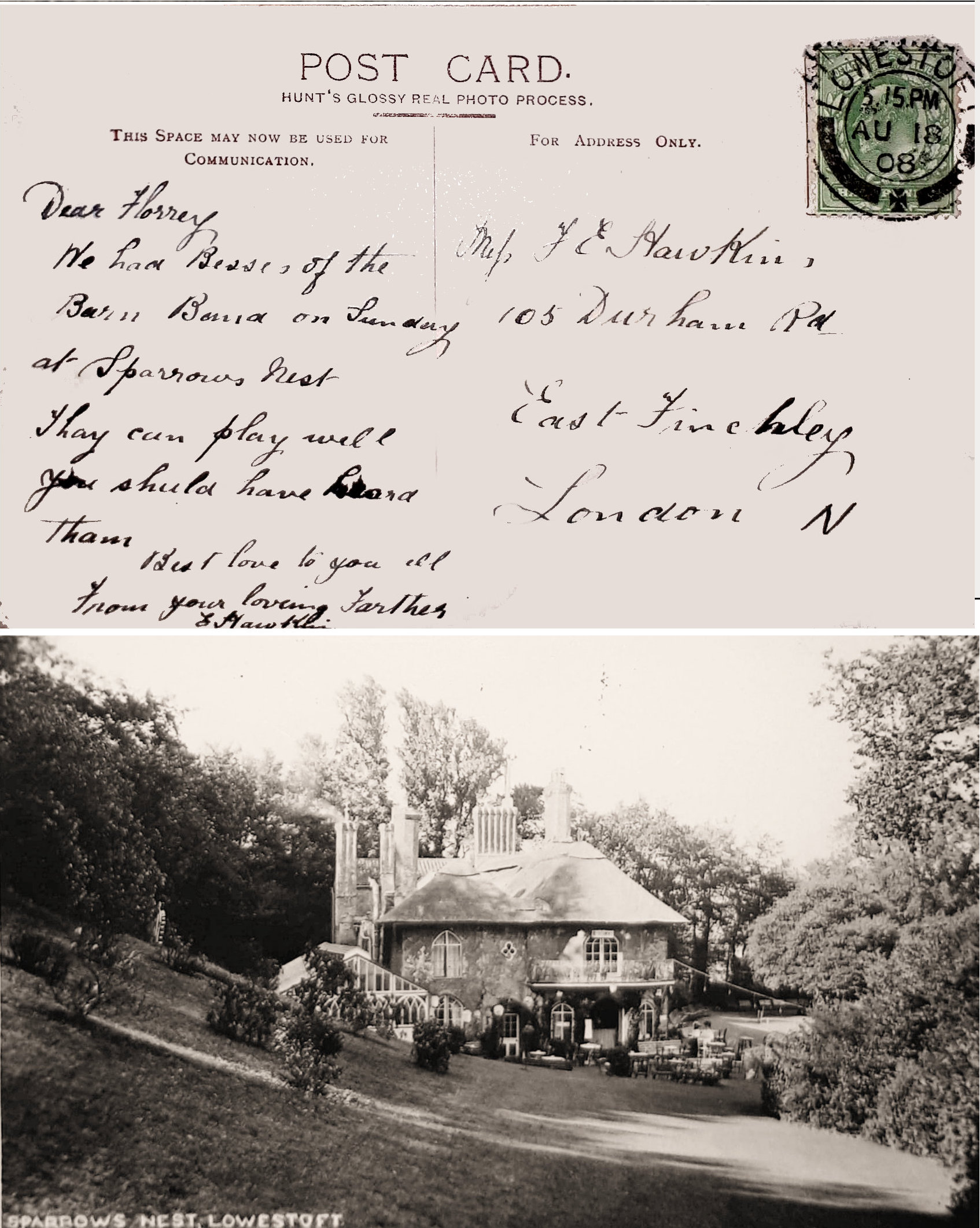
A small observation of appreciation of a long-ago concert, on Sunday 16th August, 1908. It is rare to find actual mention of a band or concert on such a postcard. Sparrow’s Nest is a public park in Lowestoft.
“Dear Florrey, We had the Besses of the Barn Band on Sunday, at Sparrow’s Nest. They can play well, you should have heard them. Best love to you all, from your loving Farther and Mawther.”
This was just one stop on a large tour by Besses during August 1908, which included playing at, on the 3rd – Heaton Park, Manchester; 4th – Goole; 5th – Alfreton Park; 6th – Rovers’ Football Ground, Doncaster; 9th – Alexandra Gardens, Scarborough; 11th – Cricket Field, Worksop; 12th Stanhope Street Football Ground, Mansfield; 13th – Colwick Hall, Nottingham; 16th – Sparrow’s Nest, Lowestoft; 17th – Chapel Field Gardens, Norwich; 19th – Upper Arboretum, Ipswich; 20th – Theatre Royal, Colchester; 23rd – Tottenham Hotspur Football Ground; and 25th – Cricket Club Ground, Wolverton.
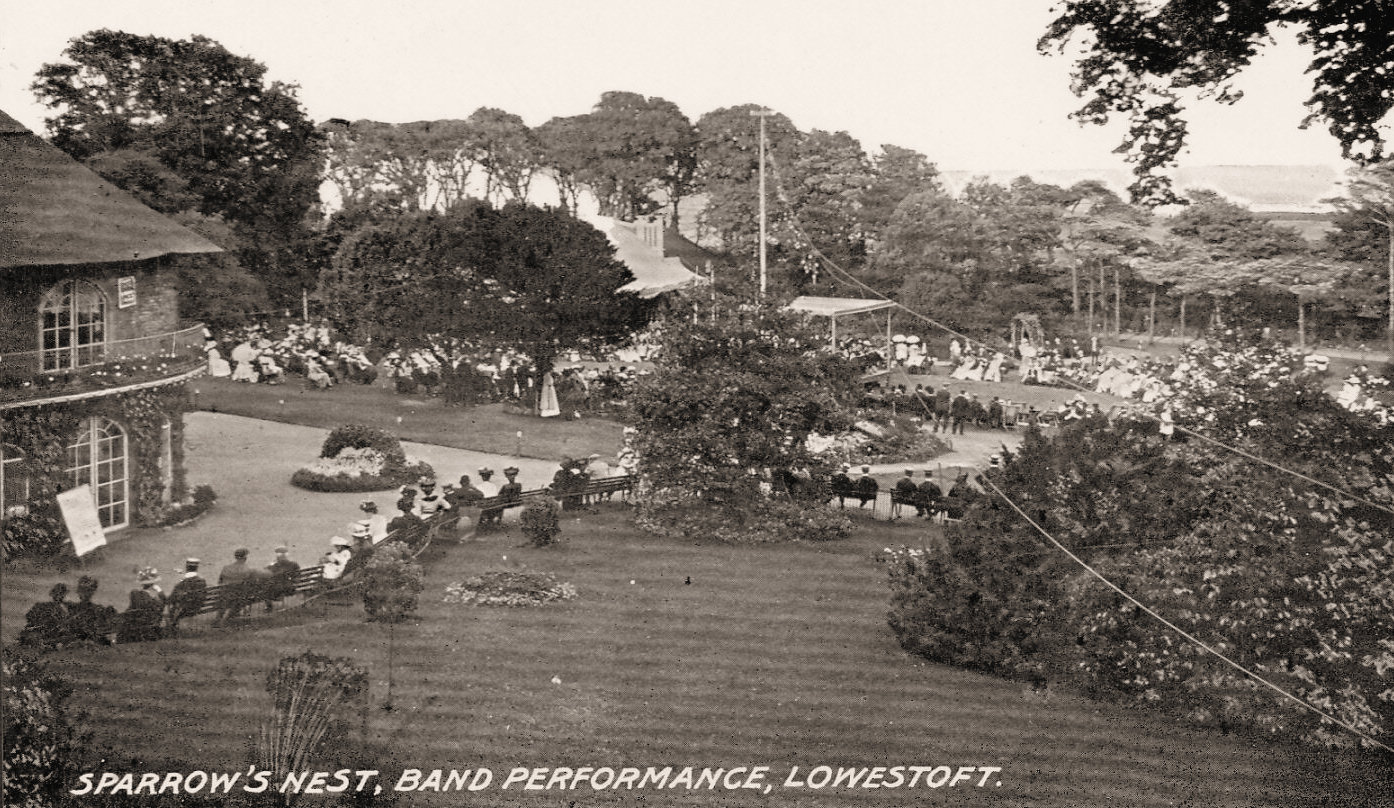
Sparrow’s Nest on reverse of the postcardA band concert at Sparrow’s Nest – probably not Besses Band
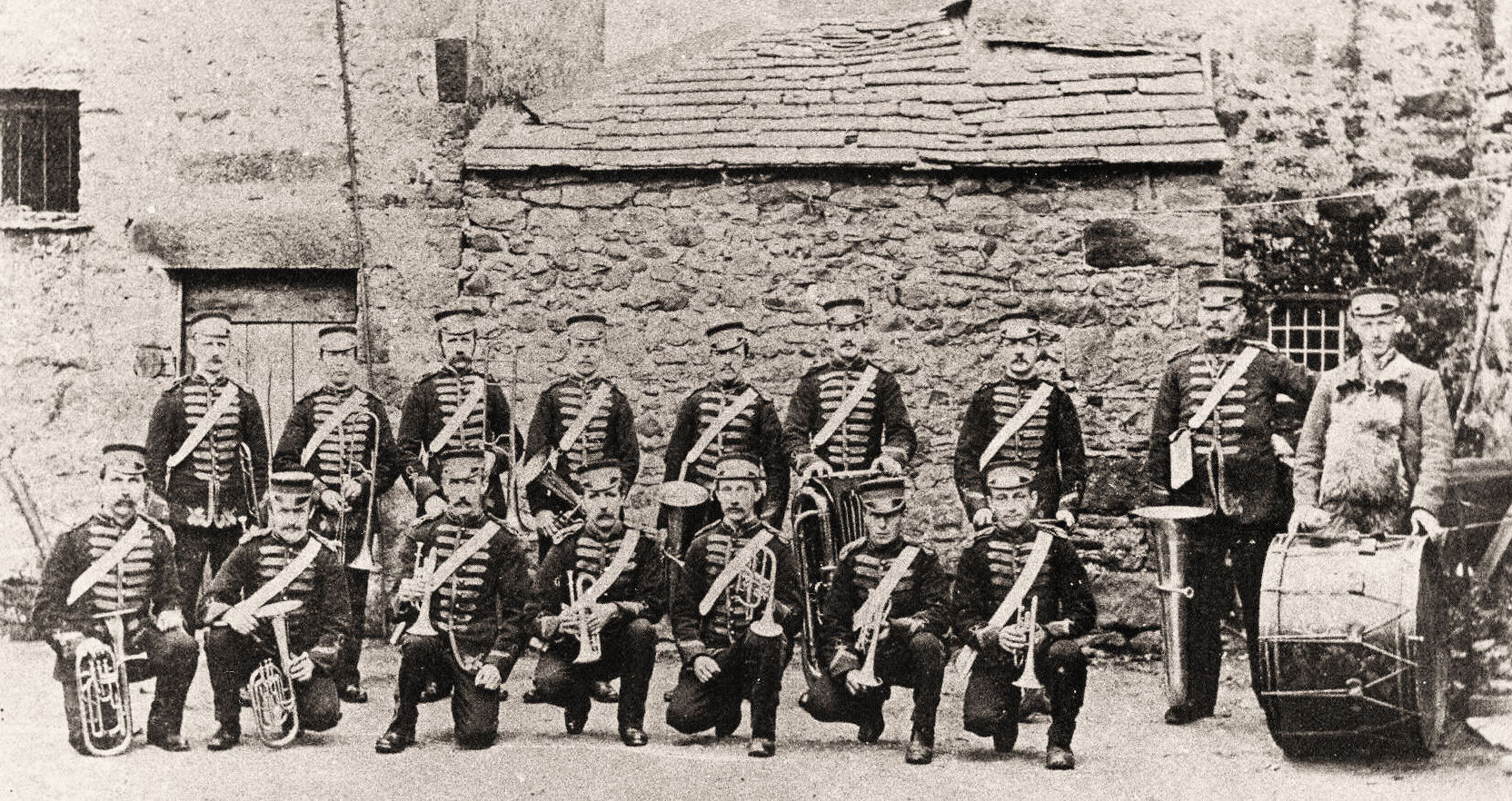
This is a photograph of the Etchingham Brass Band, from Sussex, c.1900. Although the snare drum clearly says “Etchington”, the band was from the village of Etchingham, the name “Etchington” being that of the local landed family. The band was active from 1885 to WW1, with bandmaster T. Daniels in 1891.
It was renamed or reformed as the Hurst Green and Etchingham Brass Band from 1902-1910; then the Robertsbridge and Etchingham Band from 1924-1937, with conductor John Martin in 1920-1933, and A. Smetham in 1937. It finally appears briefly as the Burwash and Etchingham Brass Band in 1945.
In a belated nod to the recent Burns’ Night, for which I had to postpone my own haggis, tatties and neeps supper (instead having a Burns’ Sunday lunch yesterday), the history of brass bands tends to overlook the bands north of the border and concentrate on those in England. Granted the latter are more numerous, but the Scottish bands have an equally long history and canon of achievements. So, if you are interested in the past lives of the brass bands of Scotland, here are my works shedding some light on these vintage musicians.
Brass Bands of Scotland – a Historical Directory – A collection of information about brass bands in Scotland over the last 200 years. Over 1,360 bands are recorded here (95 currently active), with some 731 additional cross references for alternative or previous names. This volume is an extracted subset of my earlier “Brass Bands of the British Isles” Bands of the Broch – the civilian and military brass band musicians of Fraserburgh – Various incarnations of the Fraserburgh Brass Band, together with various military bands, provided entertainment to the inhabitants of this north – east Scotland fishing town from the 1850s to WW1. Methil Brass Band – a tenancy missive and some poetry – Methil Brass Band was active from 1870 through to WW1. Not much is known about its activities prior to the 1890s, but the discovery of a tenancy letter from North British Railways, and some poetry written about the band, give a brief insight into its activities during that period. Music and Musicians for the People: Scottish International Exhibitions, 1886 & 1888 – The brass bands and their contests – The musical contributions at the two international exhibitions in Scotland, at Edinburgh and Glasgow in 1886 and 1888 were detailed in two books written by Robert Marr. I have extracted the details of the visiting and competing brass bands, using his notes, and have included roughly contemporary pictures of those that are available. Rothesay Brass Band – entertaining the excursionists fresh off the paddle – steamers on the Isle of Bute – Rothesay, the main town on the Isle of Bute, became a popular tourist destination in the Victorian era. Tourists wanted entertainment and the town council initially provided professional bands for the summer season from the mainland. A local brass band was established in 1875, which took on some of the musical duties required, and a successor band was formed in the 1920s. Shotts Foundry Brass Band – 1829 to c.1960 – The Shotts Foundry Brass Band was founded in June 1829 and survived through to around 1960. A typical industrial “works” band, it provided entertainment for the workers at the iron works, and at one time was one of three brass bands in the small town. The Bands of Forres – seventy years of music in a Scottish town – An outline of the known bands in the town of Forres over the seventy years from 1844 until the outbreak of WW1.
The following are blog posts here, and can be accessed via the links in the titles:
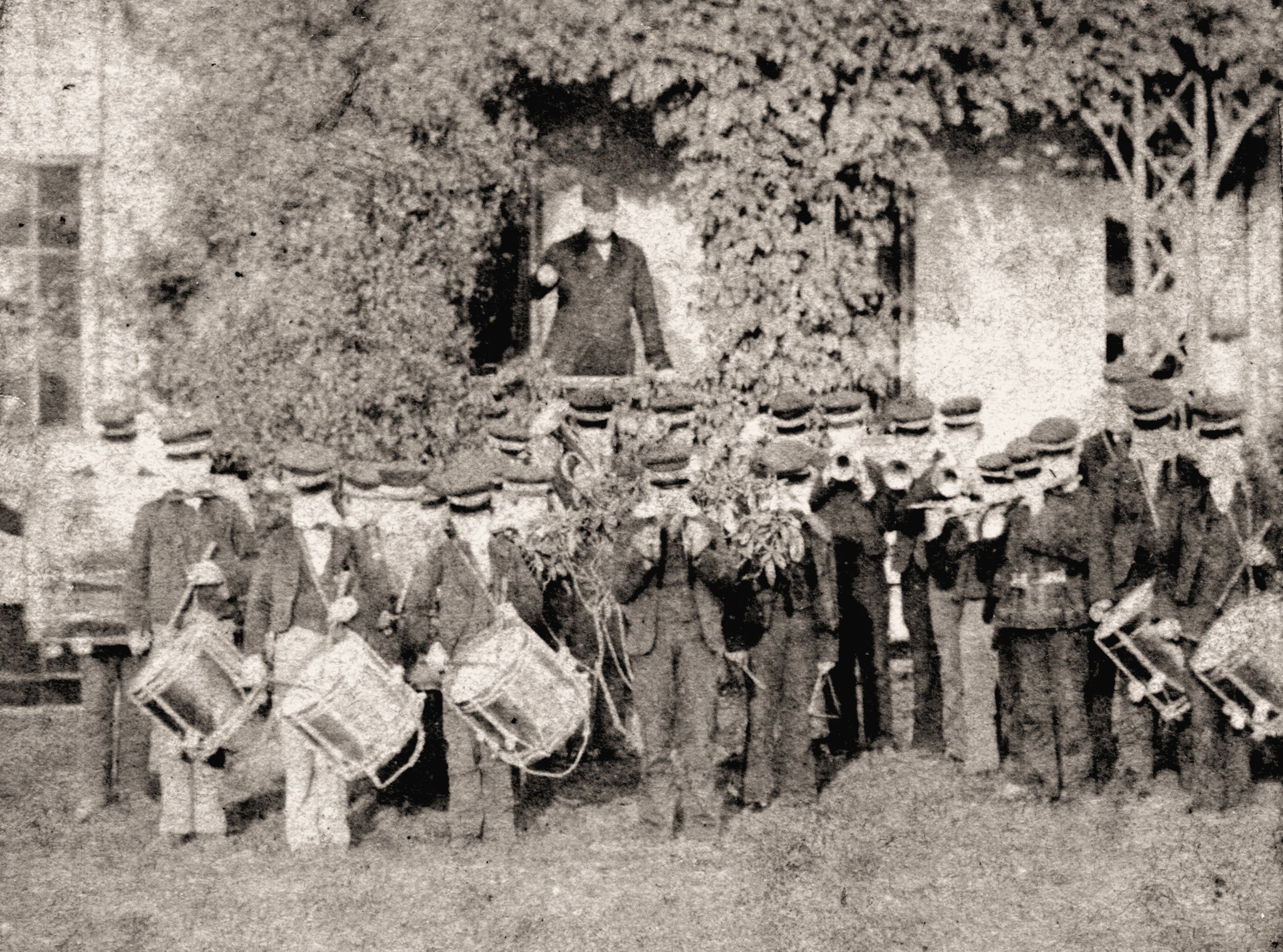
This is an unknown orphanage or industrial school band. These were fairly common in the second half of the 19th century in England, associated with those institutions housing destitute, troubled or orphaned children. The photograph is one of a stereoscopic pair, dating from the early 1870s. Unfortunately, the second image is not good enough to allow any element of the stereo effect. The institution is unknown, but the bandmaster can be seen in the background. The boys (and such bands were almost exclusively male) were trained in music, as part of their education and discipline, and the band would have been used to promote the ‘home’ and raise funds on its behalf.
Two photographs of the Bentham Prize Brass Band. Bentham is a small town in the west of North Yorkshire. The first photo dates from around 1890 and the second from the early 1900s.
The band was formed in the mid-1850s and was not wound up until 1969. Their conductor was Mr Crossley in 1891. A member of this band was Richard Adamthwaite (1861-1947), a cabinet maker in the employ of the Mr. Thomas Marshall in High Bentham. The band led the procession at the Jubilee celebrations at Clapham in 1897. A photograph of the band exists in the Leeds University Library archive, in papers relating to Rawlinson Charles Ford, who was a silk spinner of Low Bentham, Yorkshire. In its heyday it hosted ‘The Bentham Brass Band Competition’ and played an important part in town life particularly at galas. fairs and major festivals. It took part in the Brass Band championships at Belle Vue. Manchester in the 1950s. Members in 1946 were: John Ball, Fred Jenkinson, Harry Smith, Robert Robinson, Fred Watson, Ken Watkinson, Stuart Wilkinson, Tom Watkinson, George Whitfield, Edward Robinson, Ernest Thompson, Paul Magoolagan, Jim Robinson, George Pedder, Jack Easterby, Herbert Bibby, John Whinray, Tom Bibby, Ron Tomlinson, Jim Patterson, R.C. Ford, George Downham, Mark Brennand, Alec Ellershaw, John Houghton, Alan Wills, Francis Holmes, Neil Thompson and Ken Houlsworth.
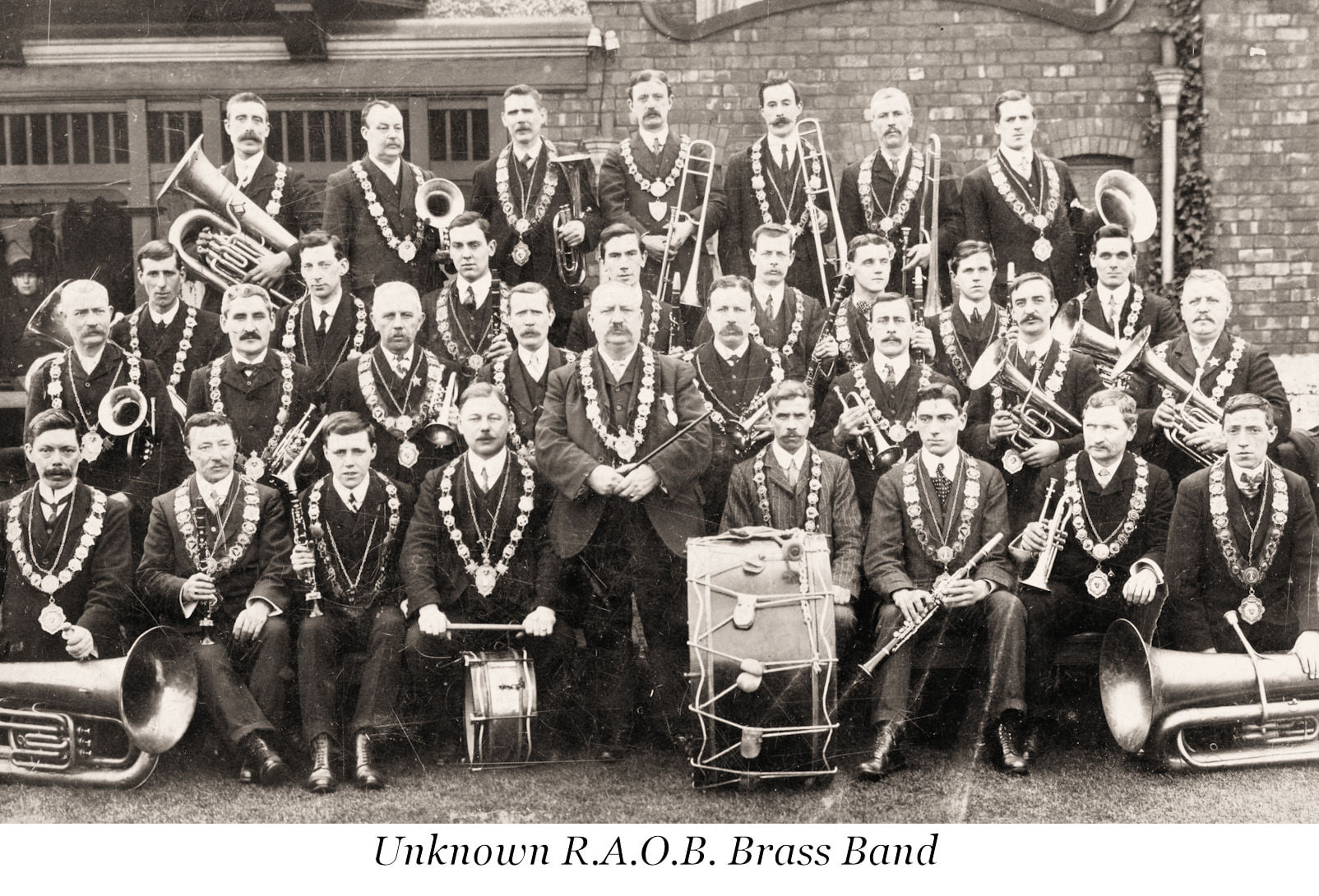
During the 19th century various friendly and fraternal organisations arose, often as savings and mutual benefit societies, but also to foster links with both workers and professional men. The most famous of these is the Freemasons, but there were very few brass bands associated with masonic lodges. More numerous were the Oddfellows, Ancient Shepherds, Free Gardeners, R.A.O.B. (Royal Antediluvian Order of Buffaloes), and Foresters brass bands. Similar fraternal organisations, with their lodges and, occasionally, brass bands, arose in the U.S.A.
This particular band is that of the Royal Antediluvian Order of Buffaloes – but which lodge or location is unknown.
There are a few known such bands:
Barry Dock R.A.O.B. Brass Band – Founded in 1892. Still active in 1899. Conductors C. Hopgood in 1893, J. Mostyn in 1894, and J. Bryan in 1898.
Hull R.A.O.B. Brass Band – Active in 1904, conductor E.G. Hurd – first appearance under their “new title” was on Sunday 14th August 1904 – it is not known what their previous name was.
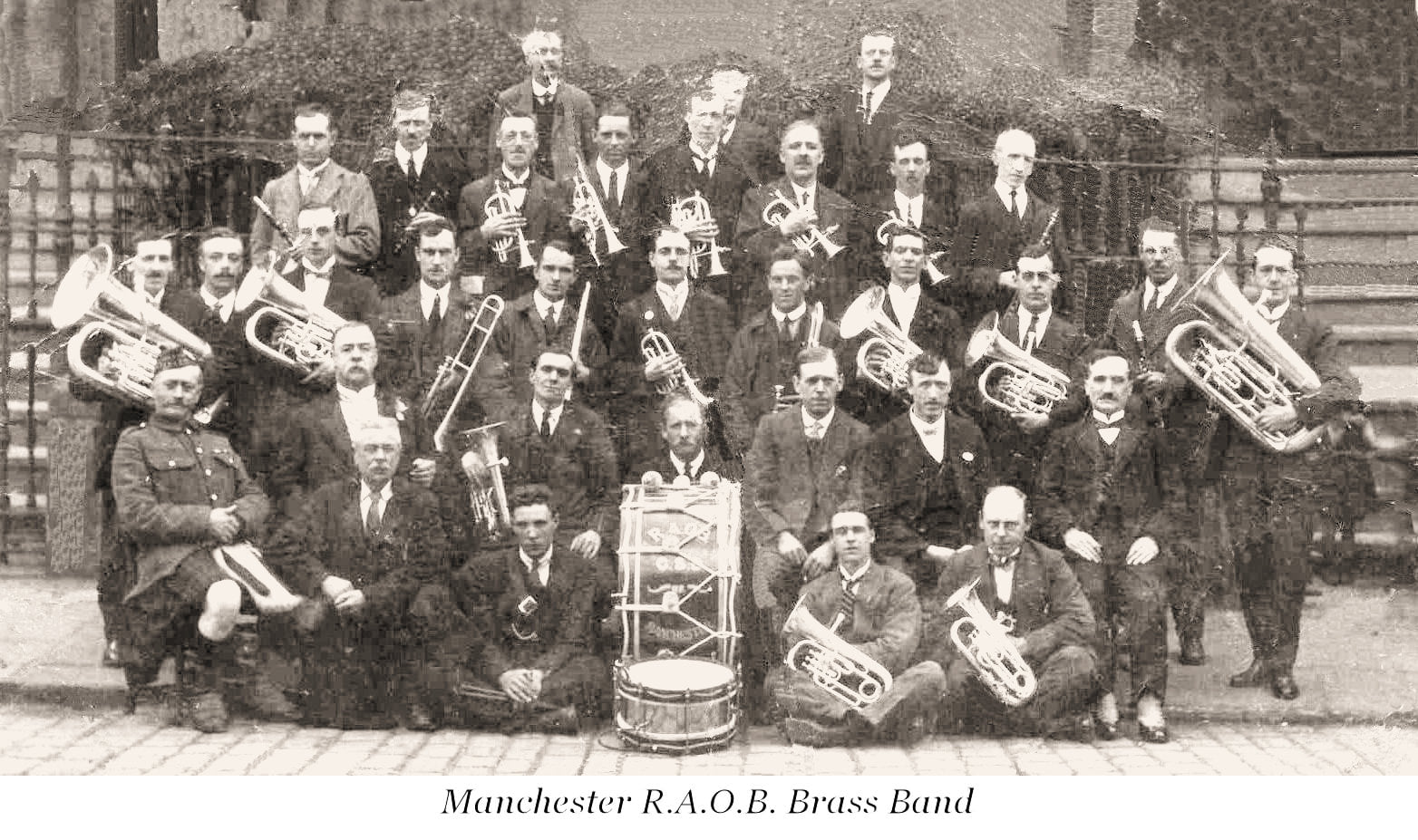
Manchester R.A.O.B. Brass Band – Active around 1905
Newcastle R.A.O.B. Brass Band – Active in 1878. Associated with the Shakespeare lodge of the Royal and Ancient Order of Buffaloes at Newcastle upon Tyne
Swindon R.A.O.B. Brass Band – Active in the 1920s and 1930s
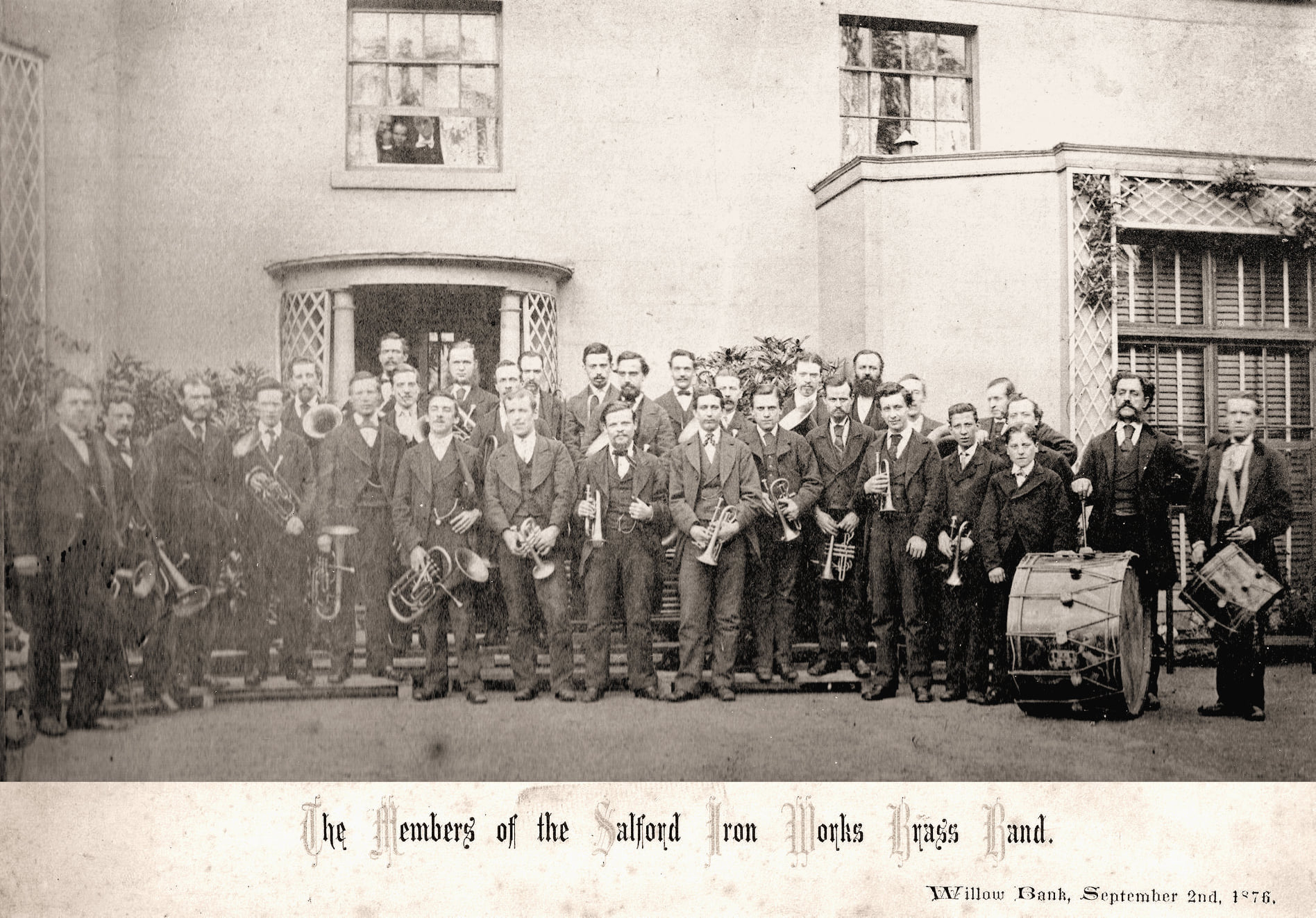
The Salford Iron Works Brass Band in 1876. This was active from 1873 through to the late 1900s, and was supported by Messrs. Mather and Platt’s Ironworks in Salford. The conductor, standing behind the bass drum, is probably John Lord, best known for leading the Bacup Old Band to many contest successes in the 1860’s and early 1870’s.


 IBEW - the History of Brass Bands